Garage Door Not Closing Properly: Common Repair Scenarios
A garage door that refuses to close properly rarely fails in a dramatic, helpful way. More often, it hesitates, stops short, reverses when it should be sealing shut, or closes unevenly enough to leave you standing there wondering whether to try the remote again. That uncertainty is part of the problem. A door can look almost normal while still putting strain on the motor, the springs, and the rest of the system.
When people search for answers, they usually want one thing: a practical way to fix garage door problems without making them worse. That is sensible, because some issues are minor and some are not. A noisy motor, a tired remote, or an ageing spring can all show up as the same symptom from the driveway, namely a garage door not closing properly.
The tricky part is that the door, the opener, and the spring system all depend on each other. If one part starts falling behind, the others often compensate until they cannot. By the time the problem is obvious, what looked like a small nuisance may already be affecting the whole setup.
What “not closing properly” actually looks like
Homeowners describe this problem in different ways. One person says the door “won’t go down all the way.” Another says it “starts closing, then changes its mind.” Someone else notices that the motor sounds normal, but the door movement does not. Those differences matter.
A garage door can fail to close properly because the motor is not doing its job consistently, because the springs are no longer supporting the door as they should, or because wear in the system has changed the way the door travels. In some homes, the issue develops slowly. In others, it appears after a part gives out, especially a spring.
This is where context matters. In coastal areas such as the Gold Coast, salt air, humidity, and heat can be hard on garage door hardware. Even a well-installed door can need more attention over time simply because the environment is working against it. What starts as a small change in operation can turn into a recurring fault if servicing gets pushed off.
That is one reason regular maintenance matters more than many people think. At least one local service provider recommends professional servicing every 12 months to help prevent breakdowns and extend the life of both the door and the motor. That advice lines up with what many technicians see in practice: the systems that get checked regularly tend to give more warning before they fail.
The opener is often blamed first, and sometimes that is fair
If the remote responds, the motor hums, and the door still does not close as expected, people naturally focus on garage door opener repair. That is not a bad instinct. Motor and opener issues are a standard repair category, and many service businesses in the Gold Coast area handle motor replacement, installation, and automation upgrades for existing garage doors.
Still, the opener is not always the root cause. An opener can be the first part to show stress because it is trying to move a door that is no longer balanced well. If the springs have weakened or a component is dragging, the motor may sound like the problem when it is actually reacting to another fault.
That said, opener problems do happen on their own. Motors wear out. Remote systems stop responding reliably. Older automation setups can become inconsistent. A door that closes one day and not the next may have an opener issue, especially if the mechanical side of the door has otherwise been stable.
The practical distinction is simple. If the opener is failing, repair or replacement may solve the issue cleanly. If the opener is only the victim of another mechanical problem, replacing the motor alone may lead to another failure later. That is why a proper diagnosis matters more than guessing which part seems most inconvenient.
Springs are one of the most important, and most dangerous, repair scenarios
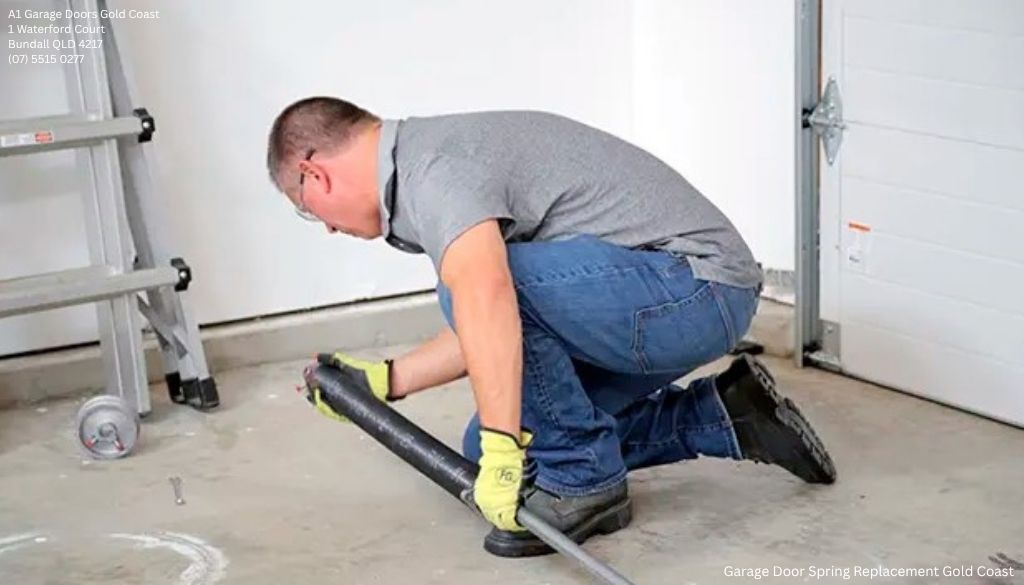
Among common repair situations, spring trouble deserves special attention. Spring replacement is a standard garage door service offering, and for good reason. Springs do the heavy lifting in the system, even though most owners never really see them as the star of the show. When a spring weakens or breaks, the door may stop closing properly, stop moving smoothly, or become unpredictable.
This is the point where do-it-yourself enthusiasm needs a hard limit. Industry and safety guidance are very clear that garage door springs are under high tension and are dangerous to adjust or repair without proper training and tools. That is not a routine homeowner job. It is a genuine injury risk.
There is also an important judgment call that catches people off guard. When one spring breaks, both springs may need replacement because they typically wear in a similar way. If one has reached the end of its service life, the other is often not far behind. Keeping one old spring beside one new spring can create balance problems, which can affect how the door closes and how much strain the opener takes on.
That balance point is easy to underestimate. A garage door system does not need to be completely broken to be out of balance. It only needs to be slightly off for closing performance to change. A homeowner may describe it as a garage door alignment issue because the door looks uneven or behaves awkwardly. Sometimes that description fits what they are seeing, even if the underlying cause is worn or mismatched springs rather than a simple adjustment.
The “alignment” question is usually more complicated than it sounds
People use the term garage door alignment for a wide range of symptoms. Sometimes they mean the door appears crooked. Sometimes they mean it does not sit right when closed. Sometimes they just mean it is no longer moving the way it used to.
That is worth unpacking, because alignment is often the visible symptom, not the full diagnosis. If the door is not balanced properly, if hardware has been affected by age and local conditions, or if the opener is straining against a door that no longer travels smoothly, the result can look like a misalignment problem from the outside.
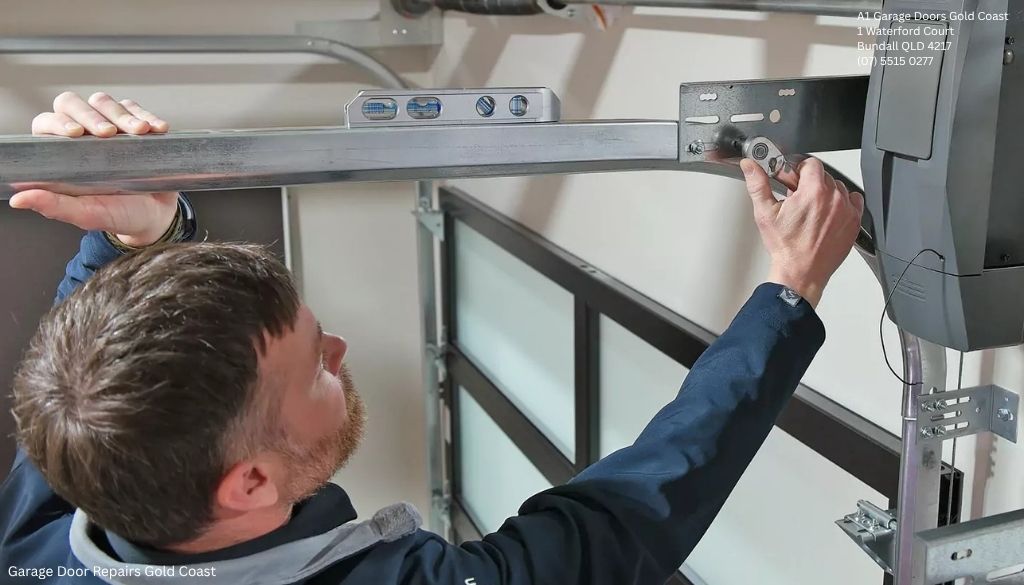
In coastal climates, this becomes even more relevant. Salt air, humidity, and heat can affect hardware over time. A door does not need a dramatic failure to start behaving differently. Small changes in how components move together can show up first at closing time, because that is when the system needs to settle neatly into place. If it cannot do that consistently, the owner sees a closing issue, but the true repair may involve more than one part.
This is one reason experienced technicians tend to resist quick guesses over the phone. “It won’t close” sounds like one problem, but in reality it can point to several repair paths, from garage door opener repair to spring replacement to a broader service check.
A few scenarios come up again and again
Some problems are more common than others, even if the final diagnosis varies from home to home. The following situations tend to sit behind many complaints about a garage door not closing properly:
- The opener or motor is failing, inconsistent, or no longer well matched to the demands of the door.
- One or both springs are worn or broken, affecting balance and changing how the door travels.
- Parts of the system have aged under local conditions such as salt air, humidity, and heat, leading to hardware wear that shows up during closing.
- An older door has had piecemeal repairs over time, and the combined wear now causes uneven or unreliable operation.
- The door is overdue for professional servicing, allowing a manageable issue to grow into a recurring fault.
That list is short on purpose. Most real jobs are combinations, not neat textbook examples. A tired motor and ageing springs can exist at the same time. A hardware issue may appear only after weather exposure has had years to do its work. What matters is understanding that the symptom is shared, while the repair path is not.
When a simple fix is reasonable, and when it is not
There is a big difference between observing a problem and repairing a dangerous mechanism. Homeowners can and should pay attention to patterns. If the remote only works intermittently, if the motor sounds different than usual, or if the door has recently started stopping short, those details are useful. They help narrow the conversation when you book a service.
Where caution matters is in the urge to force the system. Repeatedly running the opener when the door is struggling to close can put added stress on the motor. Attempting to adjust springs without training is much riskier than most people realize. Even replacing parts based on guesswork can leave you with an expensive half-solution, especially if the true problem was balance rather than automation.
A sensible rule is to separate light observation from hands-on repair. You do not need to ignore the issue, but you do need to respect the parts of the system that carry tension and load.
What a professional usually looks for first
A good service visit is not just about swapping the obvious failed part. It is about figuring out why the door stopped closing properly in the first place. In practice, that often means looking at how the opener, springs, and hardware are working together, not in isolation.
If the door has an opener issue, the fix may involve motor repair or replacement. That is a common service category, and local companies often handle both standard repairs and automation upgrades for existing doors. If the springs are the issue, replacement is standard, but the technician may recommend replacing both springs rather than only the broken one to avoid balance problems.
If the door has been exposed to years of harsh coastal conditions, a broader service may be more useful than one narrow repair. That is not upselling for the sake of it. In some cases, a single failed part is only the first visible sign that the system has been under stress for a while.
A homeowner who wants to fix garage door trouble permanently usually benefits from that wider view. The least expensive part to replace is not always the cheapest repair if it leaves the real cause untouched.
Older systems often reveal problems in stages
One pattern shows up often with ageing garage doors. First the remote becomes temperamental, then the door movement gets less smooth, then the closing issue turns up often enough that it cannot be ignored. By that point, owners are understandably focused on whatever failed last. The challenge is that wear rarely happens in only one place.
This is especially true for doors that have had years of normal use with minimal servicing. No one notices gradual decline because it is gradual. A system can feel “basically fine” right up until the day it stops being fine in a way that affects your routine.
That is why annual servicing is not just a box-ticking exercise. A regular check every 12 months can help catch developing problems before they become emergency repairs. It also gives the motor and the rest of the hardware a better chance of lasting longer, which matters because replacement is always more disruptive than maintenance.
How local conditions change the repair conversation
On paper, garage door systems seem straightforward. In the field, location changes the maintenance picture. Gold Coast conditions, particularly salt air, humidity, and heat, can affect garage door hardware and may increase maintenance needs. That single fact explains a lot of “it used to work fine” stories.
Coastal exposure can speed up the wear that would take longer elsewhere. Humidity can add to the general burden on metal components. Heat can make ordinary use feel harder on the system over time. None of that means every door near the coast is doomed. It means service intervals and repair decisions should reflect the environment the door actually lives in.
A homeowner inland might stretch maintenance and get away with it longer. A homeowner near the coast may find that the same delay leads to rougher operation, more frequent faults, or earlier part replacement. That is not bad luck. It is the predictable result of tougher conditions.
A practical way to respond when the door stops closing properly
If your garage door has started acting up, the smartest response is usually calm, not aggressive. Do not keep cycling the opener just to see if it magically rights itself. Pay attention to what changed and treat that information as useful, not trivial.
Here are the details worth noting before arranging service:
- Whether the motor responds normally or sounds strained.
- Whether the issue appeared suddenly or developed over time.
- Whether the door movement seems uneven or inconsistent.
- Whether the system has had recent repairs, especially to the motor or springs.
- When the door was last professionally serviced.
That kind of observation helps separate a likely opener issue from a broader mechanical problem. It also helps the technician arrive with a better sense of what to expect.
Repair, replace, or service, the right choice depends on the whole system
There is no single answer that fits every garage door that will not close properly. Some cases call for garage door opener repair because the automation side is the clear weak point. Some need spring replacement, and in certain spring failures, replacing both springs is the safer and more stable choice. Some doors simply need proper servicing after too much exposure to harsh local conditions and too many years without attention.
The bigger lesson is that the visible symptom is only the beginning. A closing fault is the system telling you that something is out of step, and the job is to find out what. If you treat every case as “just the motor” or “just alignment,” you risk fixing the wrong thing.
A garage door earns very little attention when it works Learn more well. It opens, it closes, and everyone moves on with the day. When it starts failing, the best results usually come from slowing down, respecting the safety risks, and treating the problem as a system issue rather than a single annoying glitch. That is how you fix garage door trouble in a way that lasts, not just long enough to get the car out tomorrow morning.